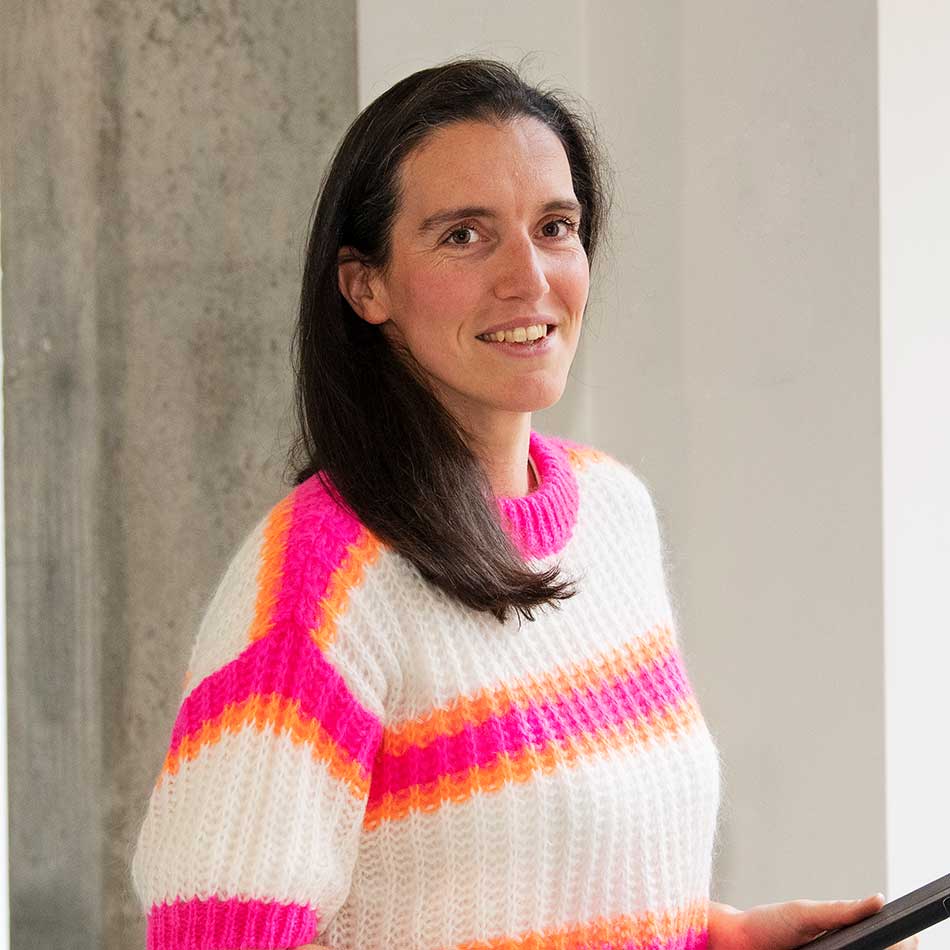
“In a growing company, you soon get swept along by the operational flow”


In 10 years, Mon3aan has grown from an accounting firm to an all-round consultancy company. Kimberley Cabo, head of corporate & finance, turned to SME Excellence in search of tools that would lend more structure to the firm’s growth. “I used to be guided by my gut feeling or my fellow partner; now I have the tools to make strategic decisions myself.”
About Mon3aan
- Consultancy company specialising in cloud accountancy, taxation, legal and strategic advice, with a strong focus on digitisation.
- 45 employees
- Branches in Gavere and Aalst
Why did you choose SME Excellence?
“In 2019, I was the first lawyer to join Mon3aan – which was a young accountancy company at the time – with the intention of assisting accountancy clients with legal advice. But the company and its services have grown significantly since then, as has my role in the company. Today, I am responsible for the corporate and finance department. This covers a wide range of aspects: we offer our clients strategic and legal support with business transfers and mergers, but we also help companies in difficult circumstances, for example by providing legal assistance during bankruptcies and judicial reorganisations or investigating alternative financing.”
“As a result, I supervise various activities and manage a diverse team that includes accountants, lawyers and financial experts. As we continued to grow, I started to feel the need for tools: how could I align the teams more effectively? How should we position ourselves towards our clients? How could we refine our business processes? Until then, I had mainly used my intuition for those kinds of things. Although it worked to some extent, it also left room for doubt. Was I on the right track? Was this the right approach?”
What are the main insights you gained from the training programme? Have they helped to resolve your challenges?
“The first session in SME Excellence is about strategy. It makes you take a good look at yourself: what is the identity of your company? This is both confrontational and enlightening.
It made me realise how important it is to take a step back and reflect from time to time. Where are we going? What kind of company do we want to be? Which clients do we want to serve? It might sound obvious, but in a growing company you soon get swept along by the operational flow.”
“I also found the session on team dynamics very interesting. I remember a diagram that expressed employee performance as a ratio of achievements to personal skills. I found that to be a very useful tool, and so much more valuable than holding all employees to the same standard.”
“However, the module about leadership was also an eye-opener. You find out such a lot about yourself as a manager. I’ve realised that I’m someone who pushes things forward – always driving things ahead, but sometimes forgetting to look back and check that everyone is still on board.”
How did you go about implementing these insights?
“A month after the first session, we started working with the core team on the strategic issues that were presented to us during the programme. We clearly defined our client base and services: we’re pursuing a customer intimacy strategy, focusing on SMEs with up to 50 employees, and we’re no longer taking on new clients with side businesses, as those smaller files tend to create frustration on both sides. During the team-building trip to Paris, we found a fun way to introduce our employees to these choices, in the form of a quiz. That got everyone on board right away and also helped us to kill time on the coach,” she laughs.
“The tools from the people management session allowed me to take our performance reviews to a higher level. Instead of an annual performance review, we now sit down with employees three times a year and formulate personal goals tailored to everyone’s performance and skills.
As a manager, I’m working on adopting a calmer leadership style, resisting the urge to take every problem onto myself. I now leave more space for initiative: what do you think about this? How would you tackle it?”
What impact have these steps had on your business?
“The strategic exercise brought clarity. Some things – such as customer intimacy – already existed, but were never really made explicit. My partner and I understand each other better now and are on the same page. Knowing what you stand for and where you want to go gives you a solid compass when making big decisions. We are more likely to say ‘no’ if a particular client request is not a good match and, even though we are fully committed to automation, we don’t jump on board with every new technology or new gadget. We always assess whether it contributes to our mission. For example, we made the conscious choice to switch to a new CRM system because it helps us to automate specific things, such as collecting the information required when setting up a new company. This frees up extra time that we can now spend serving our clients.”
“For me personally, the biggest benefit perhaps lay in sharpening my qualities as a team leader. The last session was only a few months ago, but we’re already seeing employees step more fully into their roles and take on more responsibility. It’s really rewarding to see this happening.
I also have more confidence as a strategic manager. I used to be guided by my gut feeling or the choices of my fellow partner; now I’m also in the driving seat myself.”
Get in touch!