
What’s the difference between a PhD, DBA and Executive PhD?
How to choose the doctoral programme that’s right for you…


Doctoral education in business has been evolving for several decades – with more and more people exploring the possibilities of Doctorates in Business Administration (DBAs) and Executive PhDs. At surface level, these programmes can appear similar. In reality, however, they are designed for different people, at different stages in their careers, and who have different motivations. It’s important to know the differences between them.

So if you’re considering which route to take to earn a PhD, this article sets out the key differences between a PhD, DBA and Executive PhD.
Understanding the differences matters because a doctorate is a multi-year commitment. And it represents an intellectual, personal and professional transformation.
Who PhD, DBA and Executive PhD programmes are for…
Traditional PhDs are typically taken by younger people who’ve decided to pursue a career in research and academia – sometimes directly after they’ve completed a Masters degree.
Executive PhDs and DBAs, on the other hand, are usually taken by experienced professionals. Here at Vlerick, for example, Executive PhD candidates are required to have at least 10 years’ professional experience – and it’s not unusual for them to have 20.
Different starting points for PhD, DBA and Executive PhD programmes…
Traditional PhD candidates typically start their doctoral journey with theory. They’re trained to navigate abstract frameworks and literature first – and then work towards application and relevance.
Executive PhD and DBA candidates, meanwhile, tend to set out on their journey with practice. Their research ideas are often sparked by lived professional experience – including challenges they’ve encountered, tensions they’ve observed or trends and phenomena they want to understand more deeply.
There are pros and cons of both starting points. Experienced professionals often have deep, contextual understanding – and access to quality corporate data. In other words, they can draw on their own experiences as they carry out their research. However, they also have to switch gears significantly when they embark on their doctoral journey – learning to slow down, to dive deep before reaching conclusions and to take detailed feedback.
Different learning environments and peer groups…
Traditional PhDs tend to be embedded in universities, with regular weekly courses, and sharing offices with other PhD students and supervisors.
Executive PhDs and DBAs are far more likely to be structured around the needs of working professionals. At Vlerick, the first year of our Executive PhD features a few week-long courses across a year. This is easier for working professionals to accommodate – and the peer group is other experienced professionals.
This Executive PhD journey then becomes more individual in year two and beyond – and progress depends on academic maturity, self-discipline, and a close working relationship with supervisors.
Are academic standards different between PhDs, DBAs and Executive PhDs?
Whether you’re studying a traditional PhD, Executive PhD or DBA, standards are broadly equivalent – and successful completion of any of these routes results in a doctoral-level certification.
The emphasis across all three routes is academic and methodological rigour, a clear theoretical contribution – and the creation of original knowledge. Because it’s often rooted in real-world experience, DBA and Executive PhD research can have a profound impact in the workplace and industry, as well as in academia.
At Vlerick, our research strategy leans heavily into relevance. This means that, as well as being driven by rigour, reach and responsibility, our Executive PhDs often have deep business impact. They’re a powerful way of combining academic rigour with real-world application.
How long do PhD, DBA and Executive PhD programmes take to complete?
Traditional PhDs can be taken full-time or part-time and can take anywhere between 3-7 years to complete. DBAs and Executive PhDs are almost always part-time and can span anything from 3-6 years. This allows candidates to continue to work while also researching for their doctorate.
Here at Vlerick, our Executive PhD takes five years to complete – and we recommend that candidates set aside about 20 hours a week for their studies.
Could our Executive PhD be for you?
If you have a strong interest in exploring a business topic through a rigorous academic lens – and creating new knowledge – then you may find our Executive PhD deeply rewarding.
You’ll need strong motivation, self-discipline – and a burning curiosity to uncover new insights and understanding.
Call us any time for a no-obligation conversation about your ambitions – and to discuss whether an Executive PhD is right for you. We can’t wait to hear from you!
Get in touch!
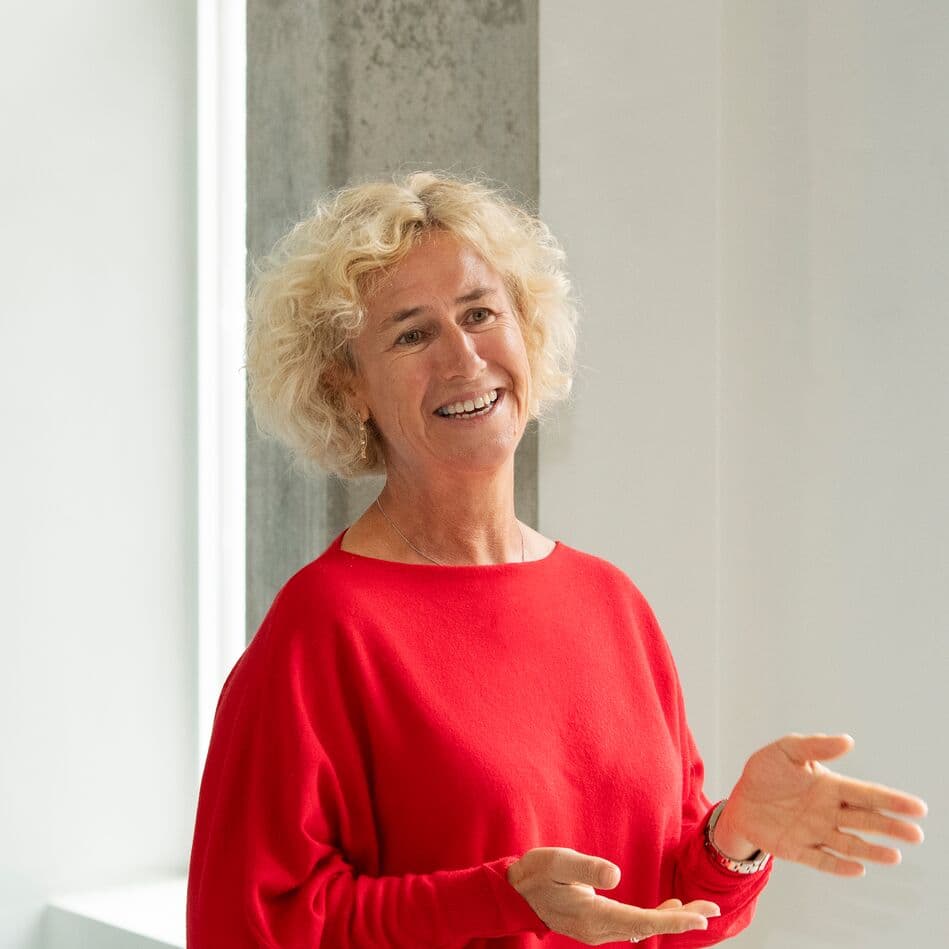
Bieke Dewulf
Corporate Partnerships, Business Development and Exec PhD