

Detailed programme
The programme focuses on two crucial pillars: the family and the business. In this programme, we actively work on topics such as succession and transition, family cohesion, family dynamics and conflict, family business strategy, family governance, a shared ownership vision and financial strategies.
Module 1: Identity of the family and the business
Distinctiveness, owners’ vision and strategic direction
WHO ARE WE? | 1 day
A family business carries a history that continues to shape every decision you make, whether consciously or unconsciously. In this module, you will gain a clear understanding of the values and patterns that drive the family, where tensions may arise and the direction you genuinely want the business to take.
The session is based on an open and honest conversation, using your family genogram as a guiding framework and drawing on the dynamics and energy it reveals. In a family business, you often wear several hats at once: owner, manager and board member, as well as family member. This interconnectedness can create tensions that nobody deliberately seeks out. Nevertheless, they are widely recognisable.
We explore the rights and responsibilities linked to each role, and how to move consciously between these roles without placing strain on relationships.
Topics covered in this module include:
- What drives your family?
- Mapping the family history
- Values versus day-to-day practice
- Translating these insights into business strategy as an essential part of succession planning
- Identifying unspoken expectations
- Developing an ownership vision for the future of the business
Module 2: Governance (corporate, family, ownership) and leadership
HOW DO WE GET THINGS DONE? | 1 day
In this module, you will work on corporate, ownership and family governance. How can these governance structures further support the ambitions of the family business, and how can you ensure that they reinforce one another?
You will also explore the delicate balance between retaining control, enabling growth and ensuring shareholder liquidity. Key topics such as dividend policy, different options for growth financing, and remuneration will also be addressed.
- Managing relationships with non-active shareholders and drafting a shareholders’ agreement
- Strengthening corporate governance (advisory board, board of directors, agenda-setting, reporting) and improving the relationship between the advisory board/board of directors and the family ownership group
- Balancing retention of control, growth and shareholder liquidity
Peer review: What have I applied, what haven’t I tried?
CHECK-IN | 0.5 day
After module 2, you will meet with your group once again. We discuss what is proving challenging and how we can further tailor modules 4 and 5 to your specific needs. What have you tried? What worked? What caused friction?
You will share concrete experiences from your own business and learn from the experience of others. An expert will steer the discussion and help you take the next step.
- Case discussion based on your own professional practice
- Peer feedback
Module 3: The family business in transition: the strategic handover
HOW WILL WE PASS IT ON? | 2 days
A family business is constantly evolving. Whether the next generation is already involved or is not yet in the picture, succession is a process that unfolds over years – not a one-off event. In this module, we take a deeper look at the strategic, practical and emotional dimensions of this transition.
We begin with the core question: are we willing and able to do this? We facilitate dialogue around the willingness of the current generation (NowGen) to let go, and the ambition and capability of the next generation (NextGen) to take the reins. Starting from this honest foundation, we explore the full transition matrix: from internal family succession to working with an external CEO, a (partial) sale to external parties, the buyout of family shareholders or a management buyout.
In this module, the two generations work separately to some extent. The outgoing generation will reflect on letting go, the fear of becoming irrelevant, and defining their new role (what’s next?). The incoming generation will develop a multi-year plan and sharpen its own vision for the future. Afterwards, both groups come together for intergenerational conversations that help shape the future direction of the business.
- In-depth analysis of succession options (family succession, external leadership, sale or hybrid models)
- Intergenerational dialogue
- Working with a non-family CEO
- NowGen session: letting go in practice, and what’s next?
- NextGen session: vision and leaving your own mark
- Willingness and readiness: the willingness to let go versus the readiness to inherit the business
Module 4: The family business ten years from now: from action plan to continuity
WHAT IS OUR LEGACY? | 1 day
In this concluding module, each family will present its ten-year plan: which structures will you put in place, how will roles be divided and which (family) values will you consciously carry forward?
A panel of experienced family entrepreneurs and Vlerick professors will provide targeted feedback. You will leave with a quarterly action plan for the next two years, as well as a place within the Families in Business alumni community: a network for lifelong learning, reflection and growth.
- Presentation to panel of experts
- Peer feedback
- Concrete action plan
- Access to the alumni community
Follow-up session: where do things stand now?
CHECK-IN | 0.5 day
Six months after the programme, you will meet again with your group for a half-day session. You will evaluate what has been achieved from your action plan and where adjustments may still be needed.
Although this is not a mandatory session, it is a valuable community meet-up that is attended by almost everyone.
- Status update from each family
- Group reflection with facilitator
- Community meet-up
Experienced practitioners
Each module welcomes a guest speaker: a family entrepreneur who has personally gone through the process. They will share what worked and what didn’t.
Why this programme
After completing the Families in Business programme, you will leave with something tangible. These are not theoretical models, but decisions you can implement immediately and agreements you can put on the table straight away. We focus on concrete outcomes.
- (Re)connect family values directly to business strategy and develop a clear vision for the future
- Strengthen intergenerational dialogue
- Learn how to conduct difficult conversations using practical discussion protocols and tools that work across a range of topics, such as remuneration, shareholder liquidity, recruitment and evaluation of family employees, exit scenarios, working with external management, different forms of external financing etc.
- Build and strengthen an effective governance structure where needed
- Develop trusted relationships with ten other families facing similar challenges, creating a sounding board that continues well beyond the programme itself
Who should attend
Families in Business is designed for family businesses preparing for a long-term generational transition. We explicitly focus on both sides of this transition.
For current and future family shareholders
- The current family shareholders (NowGen), who have invested decades in the business and are wondering how to gradually involve the next generation, without knowing for certain whether that generation will actually step in. At the same time, they are looking for ways to let go step by step, without losing what they have built.
- The future family shareholders (NextGen), who
- are at the beginning of a potential role within the family business and want to prepare themselves: what will be expected of them, and is this truly a path they want to follow?
- have already been active within the family business for some time and are looking for greater dialogue, as well as ways to leave their own mark on the company.
Who should you bring along?
We strongly recommend that two to three members of your family participate, preferably from different generations. This allows you to start from a shared understanding and immediately apply the insights to your own situation. A total of a minimum of two and a maximum of five participants.
- All involved (future) family shareholders are welcome, whether or not they hold an operational or board role
- People who have married into the family are welcome
- Additional family members are also welcome
Where does your family business stand today?
The programme is relevant for businesses at every stage of the transition: from a first-generation founder reflecting on the future, to a third or fourth generation seeking to further refine and strengthen its governance in order to preserve the family character of the company as a new generation approaches.
- Generation 1-2: building awareness and establishing the initial structures
- Generation 3+: strengthening governance, refining roles and safeguarding the family nature of the business A minimum of ten employees within the company
Practical info
- Six meetings spread over five months
Fees and financing
- 7,695 euros excl. VAT
Faculty
Anneleen Michiels
Professor of Finance & family businesses, UHasselt
Her research focuses on financing, governance, succession and ownership dynamics within family businesses and family offices.
Christine Scheef
Associate Professor of Strategy
Christine Scheef is passionate about the people, governance and strategy that shape family firms.
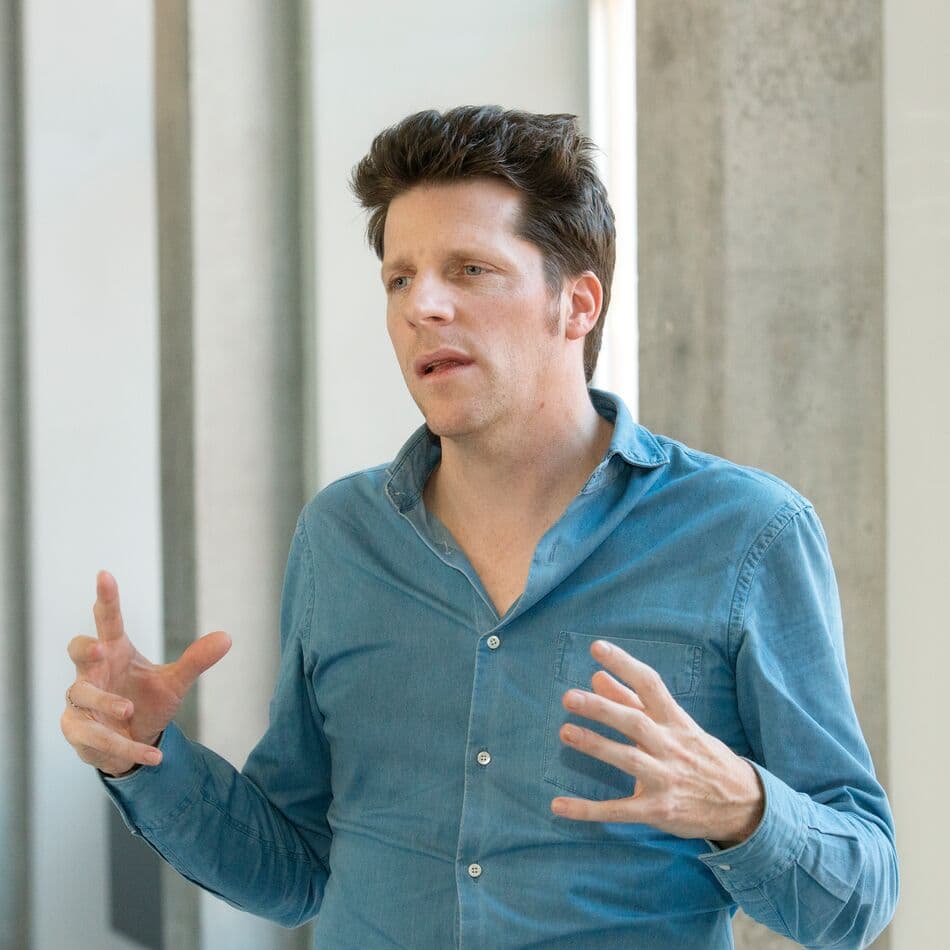
Miguel Meuleman
Professor of Entrepreneurship
Miguel Meuleman is passionate about the process, people and investors behind new venture ideas.
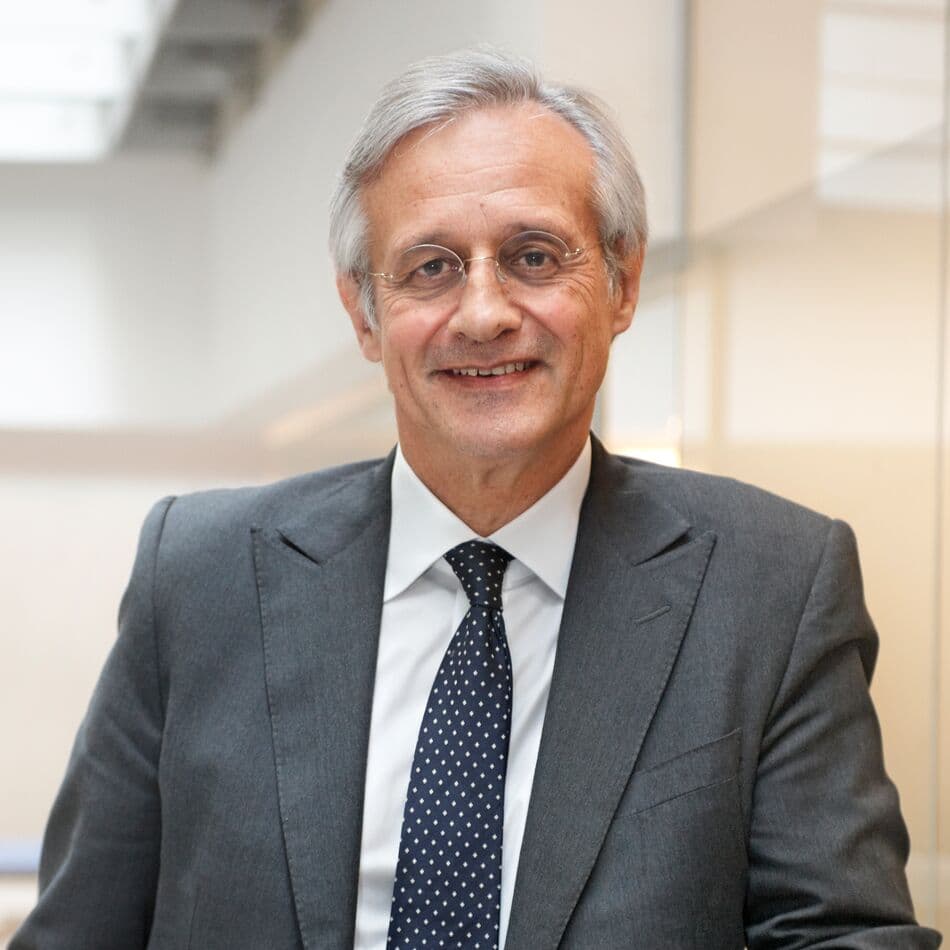
Philippe Haspeslagh
Emeritus Professor and Honorary Dean
Philippe Haspeslagh is a leading academic and international expert in strategic management, governance and mergers and acquisitions.
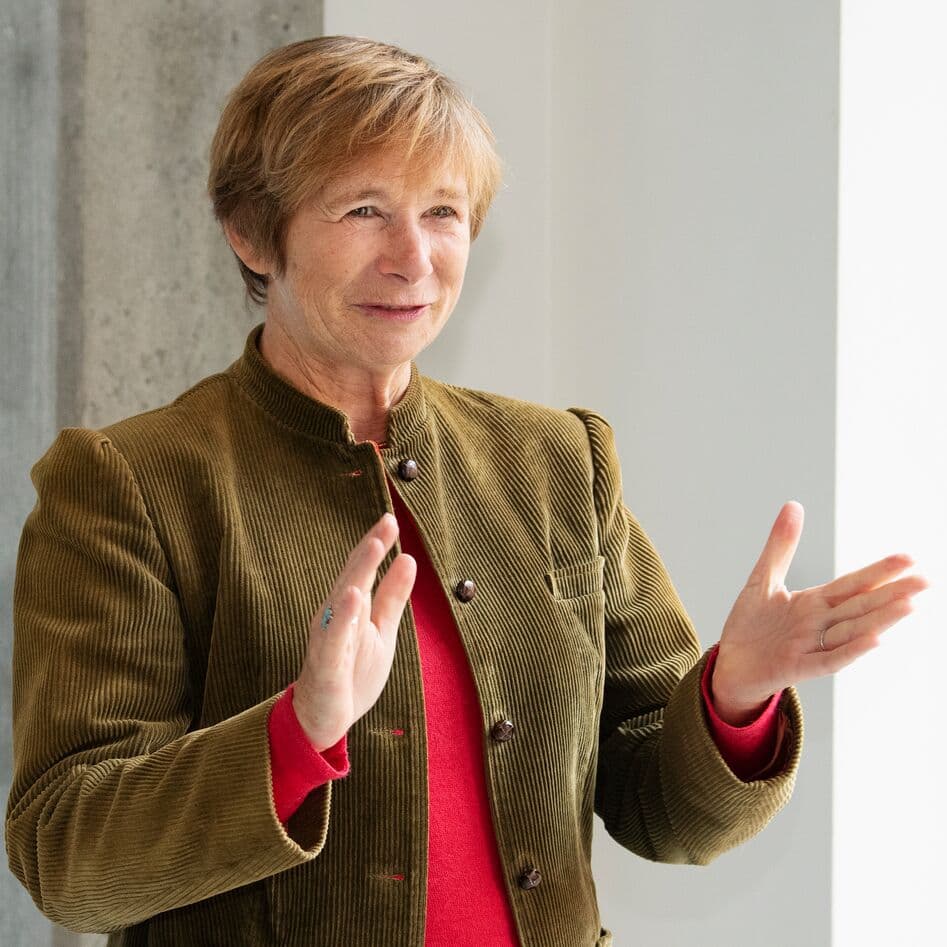
Sophie Manigart
Professor of Corporate Finance
Sophie Manigart is an experienced teacher, researcher and advisor in entrepreneurial finance, venture capital and private equity.
Get in touch!