
Scenario thinking in the age of AI


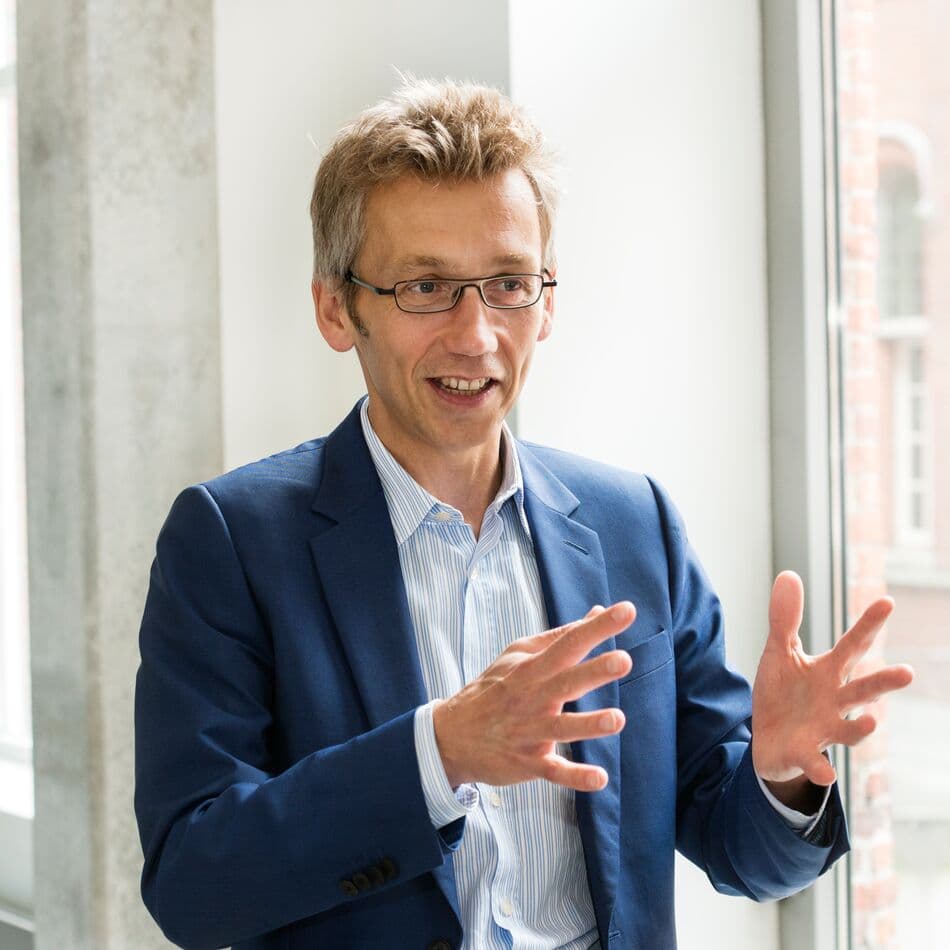
By Koen Tackx
Professor of Marketing
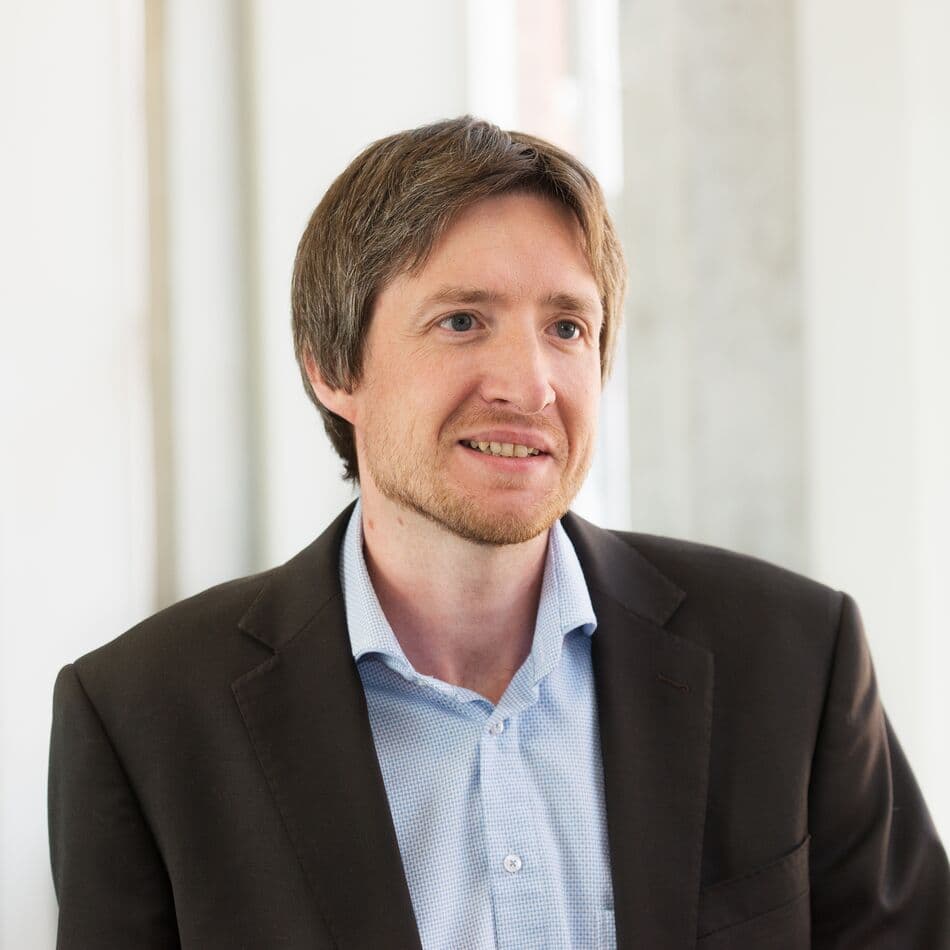
By Bjorn Cumps
Professor of Financial Services Innovation
How do you make strategic decisions in a world that can feel more uncertain and fast moving than ever before?
A new white paper from Vlerick Professors Koen Tackx and Bjorn Cumps sets out a practical playbook for incorporating AI into scenario thinking. It’s an approach that helps organisations to consider the various futures that may be in store – and it’s not new.

But AI changes scenario thinking in two important ways. First, it changes the environment you’re trying to make decisions in – sometimes fundamentally. Second, it can provide a powerful set of tools to help your organisation understand the breadth of possible futures it’s facing – and how to prepare for them.
AI creates new possibilities and uncertainties
New technologies are creating greater levels of uncertainty. Take employment and capability planning, for example. Will AI replace jobs or create new ones? Which skills will organisations need a couple of years from now? And how and where will people be working?
These are questions leaders need to ask themselves today – even when the available evidence can seem pull in different directions. Your forecasts could point to a future where AI will replace substantial numbers of jobs. Or they could indicate that AI will create new roles and opportunities. You may even be aware that tasks you’d hoped to automate still need human input.
So which future should businesses plan for?
Koen says the answer isn't to put all your faith in a single prediction.
“The idea of scenario thinking is that we cannot predict the future,” he explains. “We're going to forget about one predetermined future, but develop different possible futures based upon our uncertainties.”
So rather than trying to work out exactly what will happen, scenario thinking helps organisations explore several plausible futures and consider what each could mean for their business.
And there's an important advantage to doing this. Once you've considered different possibilities, you're better equipped to recognise the early signs of change. Developments that might otherwise seem isolated or insignificant can become signals that a particular future is beginning to emerge.
This gives organisations an opportunity to adapt their plans as circumstances evolve, rather than waiting until change is impossible to ignore.
AI helps us explore more possibilities
AI doesn’t just change the environment we’re working in. It also gives us potentially powerful tools to help us imagine possible futures.
Traditionally, scenario thinking has involved bringing together people with different knowledge, experiences and perspectives. But even a room full of experts has its limitations. The discussion can be influenced by what the group knows, remembers and assumes. By introducing AI, you can broaden the range of perspectives you capture.
“AI is very good at bringing in all the evidence for certain ideas that might live in the room,” says Bjorn. “You have a way better reach using AI tools to really build the facts and figures of your scenarios.”
AI can rapidly research and synthesise information from a wide range of sources, introduce perspectives that participants might otherwise overlook and help to test assumptions.
Getting the human-AI mix right
But while AI can add depth to your scenario thinking, it doesn’t mean you should delegate the whole process to it.
Your colleagues have the kinds of tacit and organisational knowledge that AI can’t necessarily access – such as insights gained from experience and relationships.
So how much of the scenario-thinking process should be led by people, and how much by AI? It's a question at the heart of the new white paper.
The professors describe a spectrum of possibilities. At one end, people lead the process, using AI to support research and analysis. At the other, AI takes a more active role, with people guiding, validating and refining its contributions. The challenge is to decide where each can add the greatest value.
A practical playbook for an uncertain future
Drawing on Koen's experience of scenario-thinking workshops, established research and their exploration of AI's capabilities, the professors have developed a practical methodology for businesses.
“What we’ve tried to do is to make one practical, hands-on tool companies can use,” says Koen.
And in a world where the future is impossible to predict with certainty, the advantage may lie not in knowing what's going to happen, but in recognising the signs of change – and being ready to respond.
Want to apply scenario thinking in your organisation?
Explore how a customised Vlerick programme or workshop can help your leadership team develop and use scenarios to navigate uncertainty.
Download the white paper, Scenario Thinking in the Age of AI: Preparing for Futures You Can't Predict.
Get in touch!