
What does it really mean to lead in the age of AI?


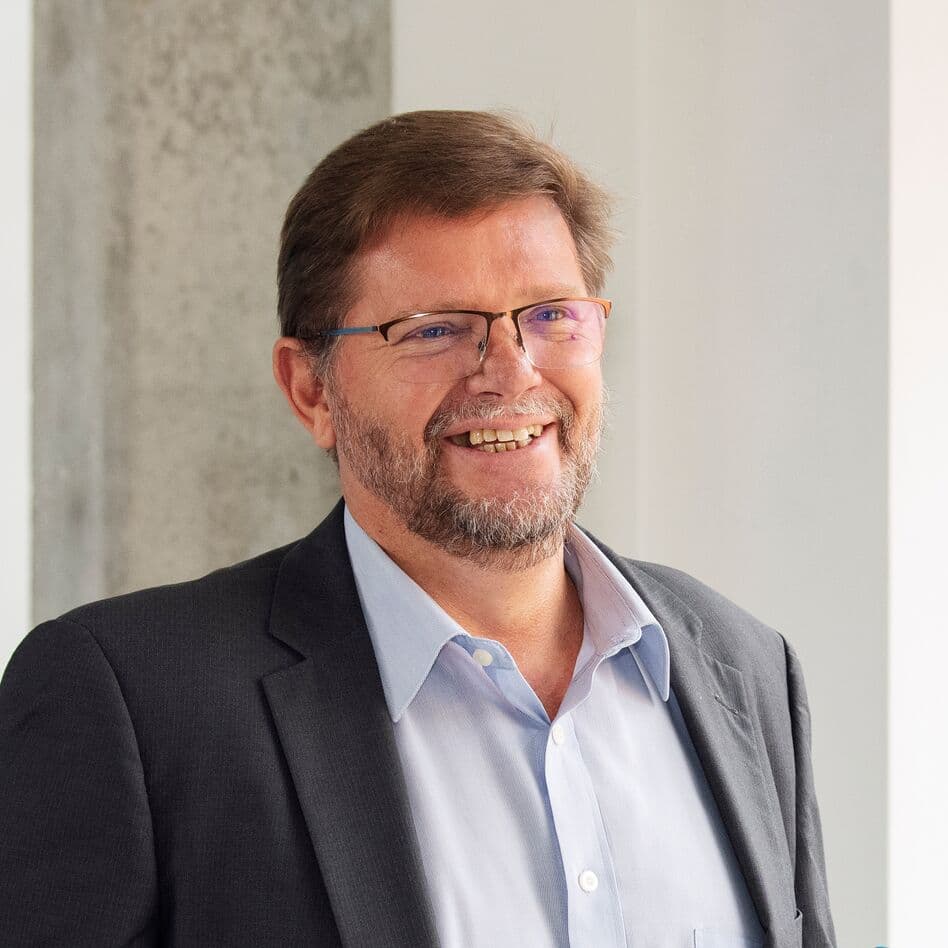
By Martin Butler
Professor of Management Practice
Across the world, leaders are grappling with the same challenge – how to get to grips with AI. But what does this really mean?
Does it mean encouraging teams to use Copilot? Or experimenting with generative AI – or increasingly introducing machine learning into decision-making? Or looking at which processes and workflows could be automated?

All these things can be good places to start.
But Vlerick’s Professor Martin Butler believes leaders need to think much bigger.
“If all you’re asking is how AI can make your existing organisation more efficient, you’re missing much of the opportunity,” he says. “The more interesting question is, what could my organisation become?”
Making this leap doesn’t mean professionals have to throw away everything they already know about leadership. In fact, it’s quite the opposite. After all, businesses have been adapting to new technologies for decades – and many of the skills they already have are more useful than they might think.
The bigger challenge is to imagine the organisation differently – and then work out how to lead it. Maximising the potential of AI may mean rethinking how work gets done, how teams are made up, where and how decisions are made and – ultimately - how the business creates value.
Prof Butler describes this in terms of three key shifts:
1. You don’t have to be an AI engineer, but you do need to speak the language…
Leaders have always needed enough understanding of finance, marketing and operations to ask intelligent questions and make good decisions. AI is now part of that broad mix.
Prof Butler says: “You couldn’t sit in an executive meeting and say, ‘I don’t understand finance – that’s the CFO’s job.’ Increasingly, you can’t say that about AI either.”
This doesn’t mean you have to become proficient in Python. But it does mean understanding enough about models, agents, training, data and their limitations to judge where AI can create value – and risk. As AI becomes more powerful, simply delegating these questions to technology colleagues becomes increasingly unacceptable.
Prof Butler says: “Boards now approve AI decisions that will shape the company for a decade. In the absence of AI literacy most approve them on trust or even worse, flawed expectations.”
2. Managing blended human and AI teams…
The second shift is less about acquiring new management skills than applying what you already know, with an AI mindset.
As AI agents begin to carry out tasks, make decisions and interact with other systems – and people – Prof Butler says leaders may need to stop thinking about them as simply another piece of software.
“An agent isn’t an employee,” he says. “But managing one may have more in common with managing an employee than with managing conventional technology.
“If you were recruiting a person, you’d ask whether they could do the job and whether they fitted your organisation. You’d onboard them, give them appropriate access, manage their performance – and eventually offboard them. Why wouldn’t we ask the same questions of an AI agent?”
It is a deceptively simple comparison. But it turns an abstract discussion about ‘agentic AI’ into some very practical leadership questions. Where does it sit in the organisational organigram? Who is responsible for it? What is it allowed to do? How is its performance monitored? What happens if its capabilities or behaviour change? And when it is no longer needed, who takes away the keys?
Also, how big will your AI Agent payroll be at the end of the month? Prof Butler points to examples of organisations that have no control over their agentic workforce and that are running up significant costs without a clear return on the investment.
3. Don’t set out to automate the organisation you already have…
The third shift is about looking beyond efficiency to the bigger organisational opportunity.
Much of the current business conversation around AI still focuses on productivity – doing the same work faster, with fewer resources. But Prof Butler thinks leaders should look beyond this.
He says: “Replacing a human role with an AI might make one process cheaper. But that’s not transformation. The real opportunity is to ask how humans and AI together allow us to organise work differently, create value differently – and perhaps even build a different business.”
At one level, that could mean redesigning a process or function. At its most fundamental, it could mean rethinking the organisation’s structure, how it creates and captures value – or even its business model.
Discover AI leadership through our Executive MBA
These three shifts are at the heart of Vlerick’s new Executive MBA AI Leadership Series. Rather than simply teaching participants how to use the latest AI tools, this series is designed to help them understand what AI means for the job of leadership.
Participants first build a clear understanding of how AI works and behaves – and put this understanding into practice by building an AI agent themselves. From there, they tackle highly practical leadership questions. How do you exercise judgment when AI produces convincing but unreliable analysis? How do you establish trust? And how do you lead teams in which humans and AI are increasingly working together?
They also get to see AI in the wild, with alumni, founders and practitioners sharing what they have built, what changed – and what failed.
The final step is personal. Participants develop their own AI Leadership Playbook, focusing on the tools they might use, as well as the capabilities they need to develop as leaders – and how they might need to reshape the organisations they lead.
Because leading in the age of AI isn’t simply about understanding what the technology can do. It’s about understanding what it could empower your organisation to become.
Get in touch!

Sihame Ghaddab
MBA Recruitment Manager – (Global) Executive and Online MBA